Miami Wants a GTA VI Makeover. These Three Cars Already Know the Part
Miami-Dade’s reported outreach to Rockstar Games raises an obvious question: what should a Vice City-inspired Miami look like when the cars are as important as the skyline?
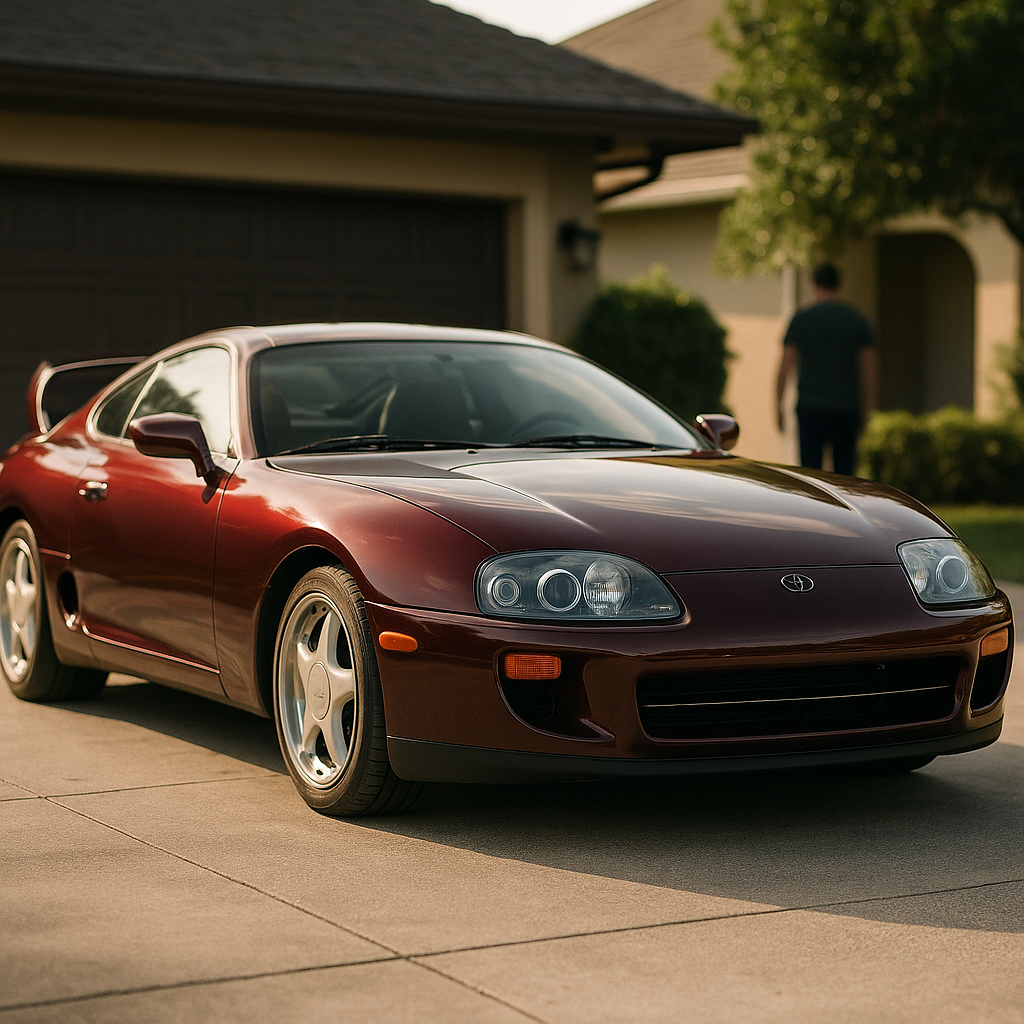
A red Mk4 Supra, a yellow 1999 NSX, and a white Integra Type S parked under Miami light would need almost no help to look like they belong in a video game. Add palm shadows, wet pavement, pastel buildings, and the charged stillness of a city waiting for trouble, and the connection becomes obvious.
Miami Wants to Dress the Part
With Grand Theft Auto VI scheduled for November 19, 2026, Rockstar Games is bringing players back to Vice City, its fictional version of Miami and the surrounding Florida coast. The setting is familiar, but the new game is expected to present a far more detailed and contemporary version of that world than the original Vice City could manage.
Miami-Dade County’s reported outreach to Rockstar, along with its stated interest in dressing up the city around the game’s arrival, puts the real place in an interesting position. Miami has spent decades being a visual shorthand for nightlife, speed, money, beaches, boats, and questionable decisions. GTA VI does not need to invent that identity. It only needs to exaggerate what is already there.
That distinction matters. A successful real-world tie-in should not turn Miami into a theme park built from generic neon signs and rented exotics. The strongest version would use recognizable local textures: older concrete storefronts, high-rise shadows, humid skies, brightly painted walls, dense traffic, and the mix of polished and slightly improvised car culture that makes South Florida feel unlike anywhere else.
The Cars Should Be Characters, Not Props
The proposed trio works because each car carries a different kind of enthusiast meaning.
The red Mk4 Supra is the obvious attention magnet. Its shape is now permanently associated with late-1990s Japanese performance, tuner culture, and the larger-than-life mythology that movies and games helped create. In a Miami scene, it should not be presented as a museum piece. A few tasteful signs of use—a clean but not sterile engine bay, period-correct wheels, or a subtle front lip—would make it feel owned rather than displayed.
The yellow 1999 NSX brings a different energy. It is exotic without being loud, technically special without needing a giant wing, and unmistakably tied to the idea that precision can be as exciting as brute force. Yellow against Miami’s blue water and pink-orange sunset would be an easy visual win, but the car should still be photographed with restraint. The NSX does not need to shout. Its proportions do the work.
Then there is the white Integra Type S. Whether used as the clean, modern counterpoint or the more accessible enthusiast car, it keeps the lineup from becoming a fantasy garage made entirely of unobtainable icons. White paint, sharp body lines, and a busy urban backdrop would give the scene a contemporary edge. It is the car that makes the other two feel connected to an active street scene instead of a collector’s showroom.
Build the Scene Like Vice City
For an image themed around GTA VI, the setting should carry as much weight as the vehicles. Park the three cars in a Miami-like area with low-rise pastel architecture, palms, overhead utility lines, and a strip of reflective pavement after rain. A distant skyline or causeway can establish location without turning the composition into a postcard.
The camera should sit low and slightly wide, as if the viewer has just stepped out of a car. Let the Supra occupy the visual center, with the NSX angled toward the brighter side of the frame and the Integra closer to the street. That arrangement creates depth while allowing all three cars to pose naturally.
Color is important, but random saturation is not. Use tropical cyan, warm magenta, sodium-orange streetlights, and deep evening blue as accents. Keep the cars’ paint believable. The red Supra should still look red, not neon crimson; the yellow NSX should retain its shape and highlights; the white Integra should show shadows instead of glowing like a cutout.
Because Rockstar’s exact promotional plans and any official Miami-Dade collaboration details should be verified through public county and Rockstar announcements, the image should be labeled as an editorial concept or fan-inspired visual—not official GTA VI artwork.
What Buyers and Owners Should Notice
There is also a real enthusiast lesson here. Cars used in themed shoots often get judged by appearance first, but the details that make them convincing are the details owners maintain: straight body panels, consistent gaps, clean glass, properly fitted wheels, working lights, and interiors that do not look ignored.
That is especially true for older performance cars. A spectacular color cannot hide neglected cooling systems, hacked wiring, tired suspension, or questionable modifications for long. The best-looking car in the scene is usually the one whose owner prepared it properly before the camera arrived.
Miami already has the atmosphere. The right cars simply sharpen it. If this collaboration develops, the most memorable result will not be a pile of clichés. It will be a believable snapshot of a city where Japanese icons, modern performance cars, and cinematic trouble can share the same wet parking lot.