The Future Mustang We Want Is a Design Argument, Not a Ford Announcement
Motor1’s look at Luca Serafini’s futuristic Mustang rendering matters less as a product prediction than as a window into what enthusiasts still want from Ford—and from the used-car market.
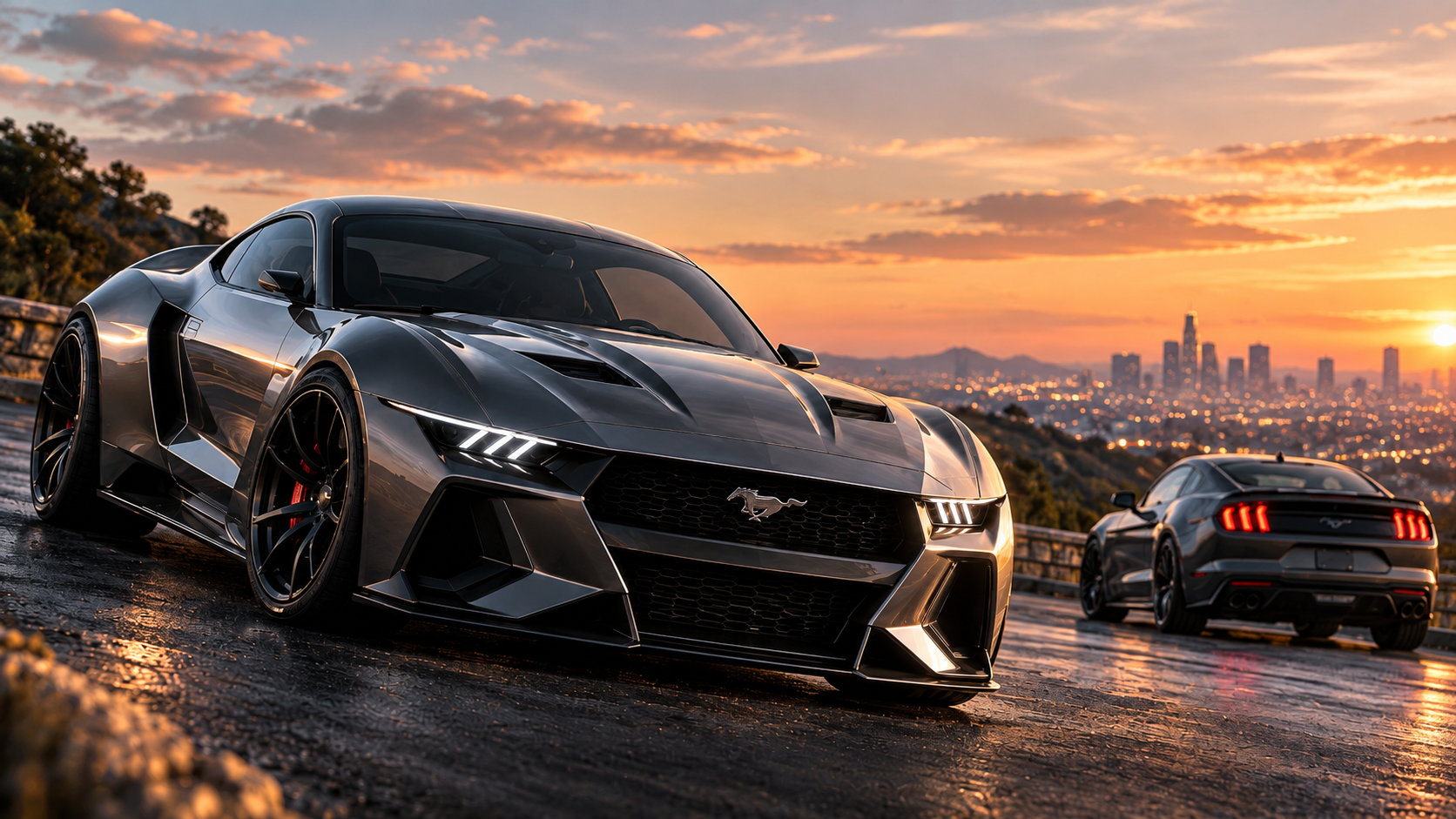
A Mustang rendering can tell you more about the state of enthusiast thinking than about Ford’s actual product plan. That is the useful distinction behind Motor1’s look at digital artist Luca Serafini’s futuristic take on the Mustang: it preserves the car’s muscle-car identity while pushing it toward something more exotic.
The headline is the starting point, not the story
“This Is The Mustang We Wish Ford Would Build” is an effective headline because it captures a familiar enthusiast frustration. People do not just want a new Mustang. They want a Mustang that feels like a compelling answer to the changing sports-car world without losing the qualities that made the name matter in the first place.
Serafini’s design is not evidence that Ford is preparing this car. It is a visual argument. The rendering asks whether the Mustang could evolve in a more dramatic direction while remaining recognizably a Mustang. That matters because the best enthusiast designs usually balance two competing demands: respect the shape and attitude people already love, then give them a reason to care about the next version.
This is where automotive news often gets flattened by social media. A speculative rendering becomes “the next Mustang” in reposts, even when the underlying story is clearly about an artist’s interpretation. Buyers and sellers should be careful with that jump. A rendering can reveal interest, mood, or design ambition. It cannot establish production intent, specifications, pricing, availability, or collectibility.
Why the exotic edge matters
The appeal of this concept is not simply that it looks futuristic. The more interesting part is the tension between its two identities. The Mustang has always carried muscle-car associations, but enthusiasts also compare it with increasingly sophisticated sports cars. A more exotic visual language suggests a Mustang that could feel special before anyone looks at a power figure or a trim badge.
That distinction is important in the private-party enthusiast vehicle market. Buyers often say they want performance, but what they are really evaluating is character. Does the car feel like an occasion? Does it have a clear identity? Is the design memorable without being desperate to look expensive?
A speculative design can surface those questions better than a conventional product announcement. It gives enthusiasts a chance to define what they value before a manufacturer defines it for them. Some will want the familiar proportions and straightforward aggression. Others will want a Mustang with more visual theater and a stronger sense of occasion. Neither reaction is automatically right, but both are useful when judging the cars already available.
Read the reaction, then inspect the real car
For a buyer, the practical lesson is to separate emotional response from purchase logic. If this rendering makes a current Mustang seem suddenly ordinary, wait before making a decision. Ask what specifically created that reaction. Was it the low, dramatic stance? The sense of exclusivity? The feeling that the car had moved beyond the usual muscle-car formula?
Then look for those qualities in an actual car, regardless of badge. A private-party vehicle should still be evaluated through maintenance records, cold-start behavior, tire and brake condition, accident history, modifications, and ownership consistency. A striking design does not excuse neglected service, and an unmodified car is not automatically the better example.
Sellers can learn from the same reaction. Enthusiast buyers are not only shopping for transportation; they are shopping for a coherent story. A carefully maintained, tastefully modified Mustang can benefit when its owner explains what was done, why it was done, and what remains original. Vague claims about being “rare” or “future collectible” are much less useful than clear documentation and honest condition notes.
The market signal is subtle
The rendering’s real significance is not that Ford should copy it exactly. It is that enthusiasts still want the Mustang to surprise them. They want continuity, but not complacency. That desire can influence how current cars are discussed, valued, modified, and preserved—even when the imagined future never reaches production.
Treat Motor1’s story as a prompt rather than a forecast. Enjoy the fantasy, identify the design choices that resonate, and bring those preferences back to the real market. The best private-party purchase is rarely the car that wins a headline. It is the one whose condition, history, and character still make sense after the excitement wears off.