What Miami-Dade’s GTA 6 Plans Could Mean for the JDM Car Scene
Miami-Dade wants to capture some of the attention surrounding Rockstar Games’ GTA 6. For local JDM owners, that could mean bigger meets, more scrutiny, and a need to present the scene carefully.
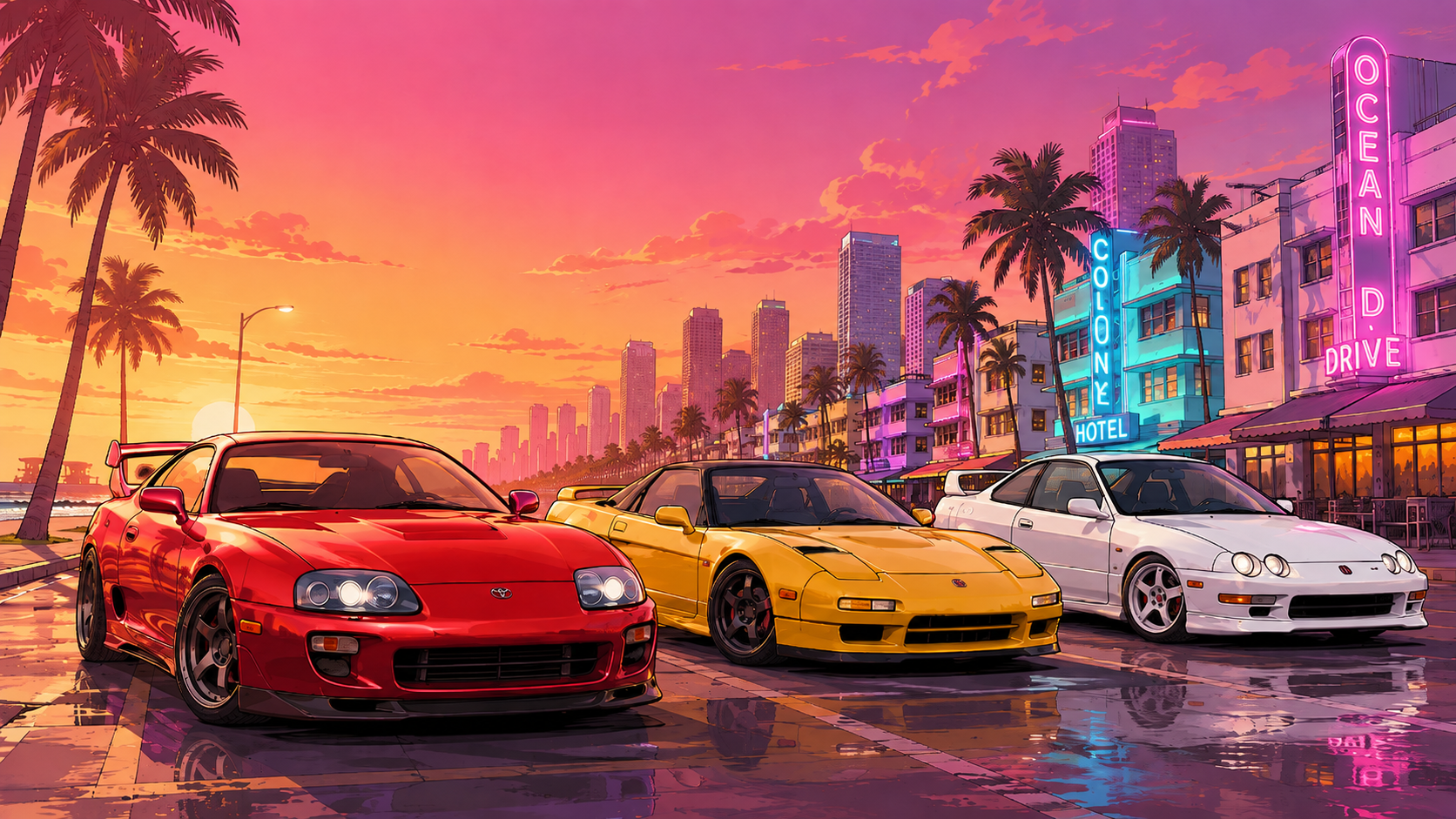
A video game release is not usually a county-level tourism opportunity. Then again, Grand Theft Auto VI is set in a fictionalized version of Miami, and South Florida’s real car culture is too visible to ignore.
The report about Miami-Dade County exploring ways to benefit from the attention around the game’s release raises an interesting question for enthusiasts: what happens when the world’s biggest entertainment event points millions of people toward a place already known for exotic cars, JDM imports, nightlife, and chaotic meets?
The answer could be good for the local scene—but only if organizers and owners understand the difference between attention and credibility.
The GTA spotlight is bigger than a game
Rockstar Games has spent years building anticipation for the next Grand Theft Auto. Because the game’s setting draws heavily from Miami and the surrounding region, its release will likely send people looking for the real places, real neighborhoods, and real culture that inspired the fictional world.
Miami-Dade County’s interest is understandable. Visitors already associate the area with beaches, nightlife, luxury vehicles, and an anything-goes visual identity. A major game launch could add another layer to that tourism machine, bringing fans who want to see the landscape behind the fiction.
For car people, that attention may show up first at meets. Visitors will want the cars they recognize from internet culture: Honda and Acura builds, Nissan and Toyota imports, Mitsubishi Evos, Mazda rotary cars, kei-inspired projects, and carefully maintained older models that still have personality. The JDM imports car scene has plenty to offer, but it also has a reputation to protect.
More eyes can help—and hurt
A larger audience can be useful for owners trying to sell a rare import or find buyers for a properly documented build. It can also help legitimate meet organizers attract vendors, photographers, sponsors, and owners from outside South Florida.
But bigger crowds bring predictable problems. Illegal takeovers, burnouts, blocked roads, excessive noise, and reckless driving are not harmless expressions of enthusiasm. They give officials a reason to restrict every gathering, including the well-run ones. When a local government starts thinking about the GTA 6 opportunity, it will also be thinking about traffic, public safety, cleanup, and whether a car event is an asset or a liability.
That puts responsibility on the people who actually own the cars. A clean meet with controlled entry, clear parking, security, restrooms, and a firm no-stunts policy is far more valuable than a spontaneous gathering that produces a few viral clips and a long list of complaints.
What sellers should expect
Private sellers may benefit from the attention, but hype does not erase the usual rules of buying an enthusiast car. In fact, it makes documentation more important.
A seller with a desirable JDM import should have the basics ready: import paperwork, title history, maintenance records, chassis or VIN information where applicable, photos of the underbody, and a clear explanation of modifications. If the car is swapped, turbocharged, repainted, or converted, say so plainly. Buyers drawn in by the GTA 6 moment may be excited, but excitement is not the same as knowledge.
The market will also attract opportunists. A car being old, right-hand-drive, or visually similar to something seen in a game does not automatically make it rare or valuable. Buyers should inspect for rust, questionable wiring, mismatched panels, worn suspension components, and incomplete emissions or registration compliance. In South Florida, flood exposure deserves particular attention, especially when the history is vague.
The scene should show its best side
The strongest response to Miami-Dade County’s interest is not to imitate the reckless image associated with Grand Theft Auto. It is to demonstrate the real culture the game borrows from: craftsmanship, individuality, local knowledge, and cars that are maintained because their owners genuinely care about them.
That means meet organizers should coordinate with property owners and local authorities when necessary, publish rules before the event, and remove troublemakers quickly. Owners should avoid treating public roads as a stage. Spectators should understand that a rare import is still someone’s expensive, fragile machine—not a prop.
If the county turns the GTA 6 release into a broader tourism or events push, the JDM community will be part of that conversation whether it asks for the attention or not. The opportunity is real, but so is the risk of being defined by the worst behavior in the parking lot.
The practical takeaway is simple: enjoy the spotlight, but earn it. For sellers, that means transparent records and realistic pricing. For organizers, it means controlled, lawful events. For everyone else, it means remembering that Miami’s car culture does not need a fictional crime spree to be interesting. It just needs to be organized well enough for people to see what makes it worth visiting.